

Key takeaways:
- Citations, AI Overview and SGE appearances, and share of voice inside AI answers matter far more than raw impressions.
- Nearly half of AI Mode citations are highlighted passages lifted verbatim from a page — so "did we get quoted?" is now a real KPI.
- Judge success by referral quality and downstream impact, not clicks alone.
- Tie visibility back to conversions, engagement, and qualified leads to prove effectiveness.
- A structured audit beats a scattered dashboard when AI keeps changing the rules.
The metrics that won the ten-blue-links era have become liabilities in AI-driven search. Traditional KPIs like average position and impression volume mask whether you're actually being cited, quoted, or included in the synthesized answers that now intercept user intent before they ever click through. Winning inside AI search demands a complete recalibration of what you measure and why. Below, I'll break down the KPIs that actually signal influence inside AI answers and how to connect them to business outcomes. For the wider view of tracking across both worlds, see Seo Tracking For Ai And Search.
What specific metrics or KPIs should I track to evaluate SEO performance in AI-driven search environments like Google SGE or Bing Copilot?
Rankings alone no longer tell you whether you're being read. In AI-driven search, the KPIs that matter are:
- Citation rate — how often AI answers name or quote your pages. A Pillarbase census of 15.7 million AI Mode citations found 47.7% weren't plain links at all; they were highlighted passages the engine pulled verbatim. Being quotable is measurable, and it correlates strongly with ranking #1.
- AI Overview and SGE appearances — the raw count of AI-generated answers your content shows up in.
- Share of voice — your slice of citations for a topic cluster versus everyone else answering the same questions. A blended share of voice that hides a zero on one engine is worse than no number at all, which is why measuring it precisely across each AI search platform matters more than leaning on raw impressions.
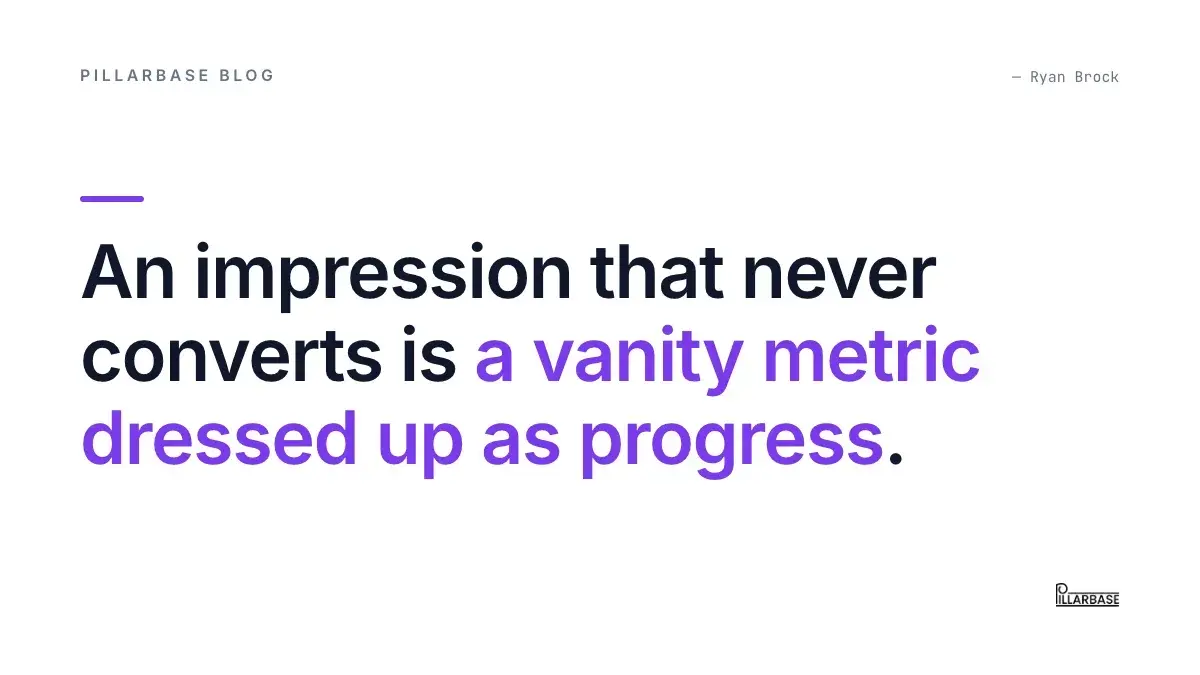
Just as important is referral quality. An impression that never converts is a vanity metric dressed up as progress. Track what happens after the click: session depth, assisted conversions, and whether AI-sourced visitors become qualified leads. A tracker should surface presence inside AI-generated results, not just report where you sit on a traditional SERP. To capture these signals you need a dedicated category of tooling: AI visibility trackers built specifically to monitor your presence and performance inside AI-generated results, since traditional SEO metrics like keyword rankings and organic traffic no longer capture whether you're actually showing up in AI-generated answers. These fall into a few types — citation monitors that log when and where your pages get quoted, AI Overview and SGE appearance trackers that count your inclusion in generated answers, and share-of-voice platforms that benchmark your citation footprint against competitors across a topic cluster. Pillarbase's Performance module is built for exactly this purpose, unifying search and AI visibility so you can see the full picture in one place rather than stitching together disconnected reports.
How to measure SEO success when AI is changing search?
AI has reshaped the journey. People now get synthesized answers before they ever reach a link, so a flat click count hides more than it reveals. True success means measuring inclusion — are you the source the model chose to cite? Watch AI-specific signals like appearances in AI summaries and the caliber of traffic those features send. One well-formed passage in the study answered 483 distinct queries, proving that a single quotable paragraph can carry an entire cluster of phrasings. That's leverage you can only spot if you're tracking citations, not keywords. Because the landscape shifts monthly, monitor visibility movement and adapt your measurement approach as AI features evolve. This is where an AI rank tracker online tool earns its keep: rather than snapshotting a single moment, it continuously watches how your citations and AI appearances rise and fall over time, so you can spot when a new AI feature reshuffles the results and adjust what you measure before your reporting goes stale. Treat your measurement framework as a living thing — when the engines change how they surface and attribute answers, your KPIs and the way you track them should evolve in step. An online tracker that updates as the models update keeps your visibility story accurate instead of anchored to metrics the platforms have already left behind.
How to measure SEO effectiveness?
Effectiveness is not the same as activity. Surface-level metrics — impressions, average position, keyword counts — describe motion, not results. Measuring the effectiveness of SEO built for AI search means tracing every visibility win to a business outcome. Ask: did an AI citation drive a demo request? Did an AI Overview appearance shorten the path to a qualified lead? Connect the dots this way:
- Segment AI-sourced sessions from traditional organic traffic.
- Map those sessions to engagement and conversion events.
- Attribute pipeline and revenue back to the pages earning citations.
Pairing that outcome data with signals from a rank tracker lets you tie visibility movement to tangible results — conversions and pipeline, not applause. An AI rank tracker that plugs into Google's ecosystem makes that connection concrete: by joining your AI and search visibility data with analytics and conversion tracking, you can follow a cited passage all the way through to the sessions it generated, the engagement those visitors showed, and the deals they eventually influenced. That's how you prove effectiveness to a business decision-maker — not by showing you appeared in an AI answer, but by showing that appearance produced qualified leads and revenue you can point to on a report.
How to measure AI SEO?
Assessing AI SEO comes down to a simple primer: track AI-generated citations, log SGE and AI Overview appearances, and measure your share of voice within a topic. AI SEO benchmarking measures your brand's citation presence and share of voice across AI-generated search answers, rather than the traditional rankings or impressions most dashboards still default to. Then go deeper than the dashboard. A structured audit is where the real diagnosis happens — you identify which passages get extracted, which pages are becoming citation magnets, and where competitors are stealing share. An AI visibility audit is that comprehensive measurement approach formalized: a systematic review of exactly how, where, and how often your content surfaces across AI-generated results. Rather than glancing at a single metric, an audit examines your citation rate, your inclusion in AI Overviews and SGE answers, your share of voice across an entire pillar, and the quality of the traffic those appearances send — then maps each finding to a business outcome. It tells you which topics you already own inside AI answers, which passages are doing the heavy lifting, where you're losing ground to competitors, and which gaps to close next. Combine that workflow with the right tools and you move from counting to understanding. The discipline is refusing vanity metrics at every step: a number only earns a place on your report if it reflects genuine influence inside AI-powered search and points toward revenue.
Reject the metrics that only look good in a screenshot, and you'll finally know whether your work is landing where decisions get made. If you want to see exactly which passages and topics AI is citing in your space, request a full report on your topic and start measuring what actually matters.